AI & Computer Vision | Multidisciplinary Senior Design Project – KFUPM
Smart Truck Yard & Dock Queue Management & Optimization System
AI-Powered Yard Monitoring, Queue Management and Decision Support System
A prototype system that watches truck arrivals and dock-side congestion through cameras, predicts how queues will build up, and recommends actions to supervisors, such as where to move workers or when to hold trucks at the gate.

Overview
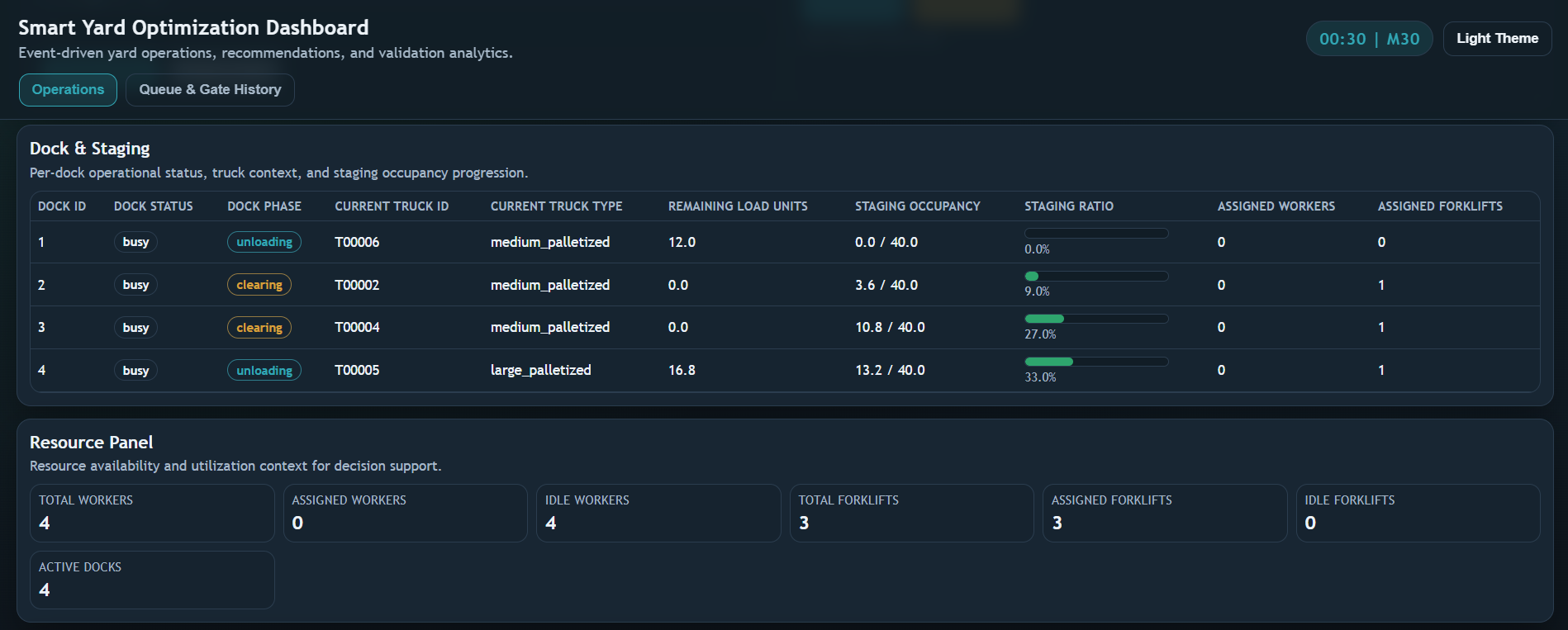
The system gives distribution center supervisors a live view of their yard and a suggested next step. Cameras read truck license plates at the gate and estimate how full the staging area is. A backend turns this into live queue and dock information. A forecasting and simulation engine then tests possible actions and recommends the best one on a web dashboard.
Project Background
In a distribution center, trucks wait at the gate for a free dock. A dock can stay occupied longer than needed when the staging area next to it is full, because unloading has to slow down or pause. This keeps trucks waiting longer outside, which adds detention costs, traffic and safety risk, and idling emissions.
Yard decisions and warehouse decisions are usually handled separately, so supervisors often can’t see what is really causing the delay. Existing yard management tools mostly show dashboards and alerts, and simulation tools are usually used offline for planning. Our project aimed to combine live sensing, short-term prediction, and what-if simulation into one loop that ends with a specific recommendation.
We were a team of six students from four disciplines: Industrial Engineering, Computer Science, Computer Engineering, and Electrical Engineering. We built a lab-scale prototype with a warehouse mockup, an overhead camera, and a Raspberry Pi 5.
How It Works
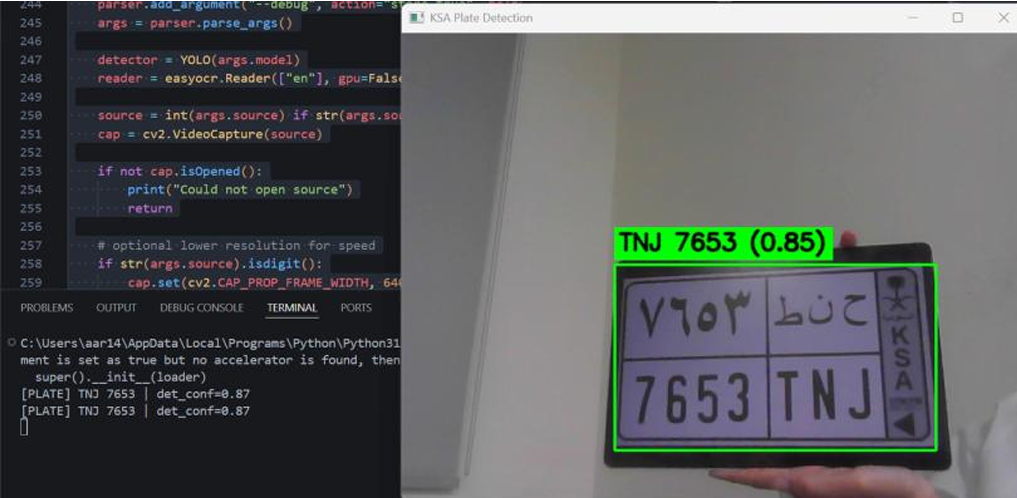
- Sense: A camera reads truck plates at the gate, and an overhead camera measures how full the staging area is.
- Estimate: The backend combines these inputs with the supervisor’s inputs (workers, forklifts, active docks) into one current state.
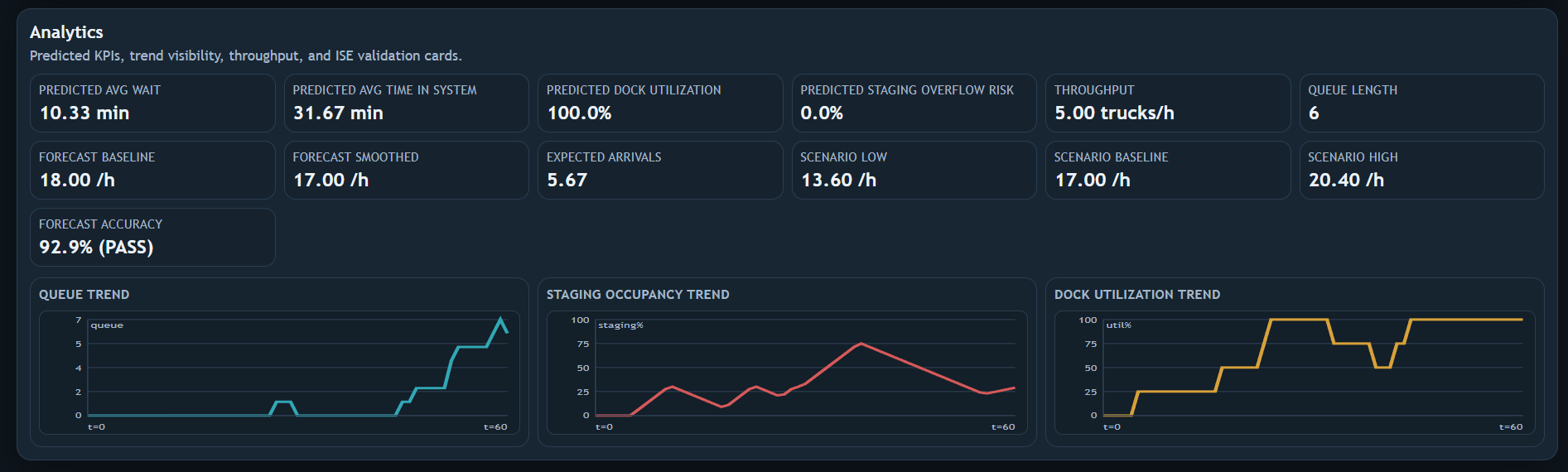
- Forecast: It predicts arrivals for the next 30–60 minutes under low, normal, and high scenarios.
- Simulate: A discrete-event simulation tests candidate actions: balance workers, prioritize large trucks, clear staging, or slow gate release.
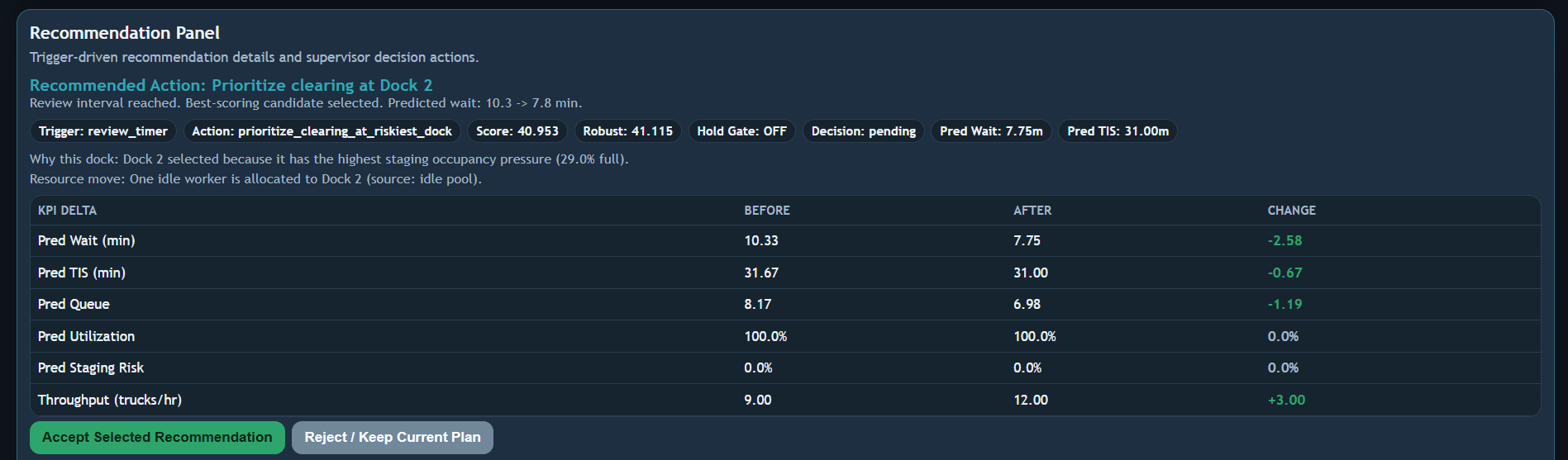
- Recommend: Actions that break staffing or capacity limits are removed first. The rest are ranked by their worst-case result across the three scenarios, and the best one is shown on the dashboard.
Project Screenshots
Key Features
- License Plate Recognition: Detects plates with a trained YOLO model and reads them with EasyOCR. Preprocessing, correction rules, and voting across frames keep the output stable.
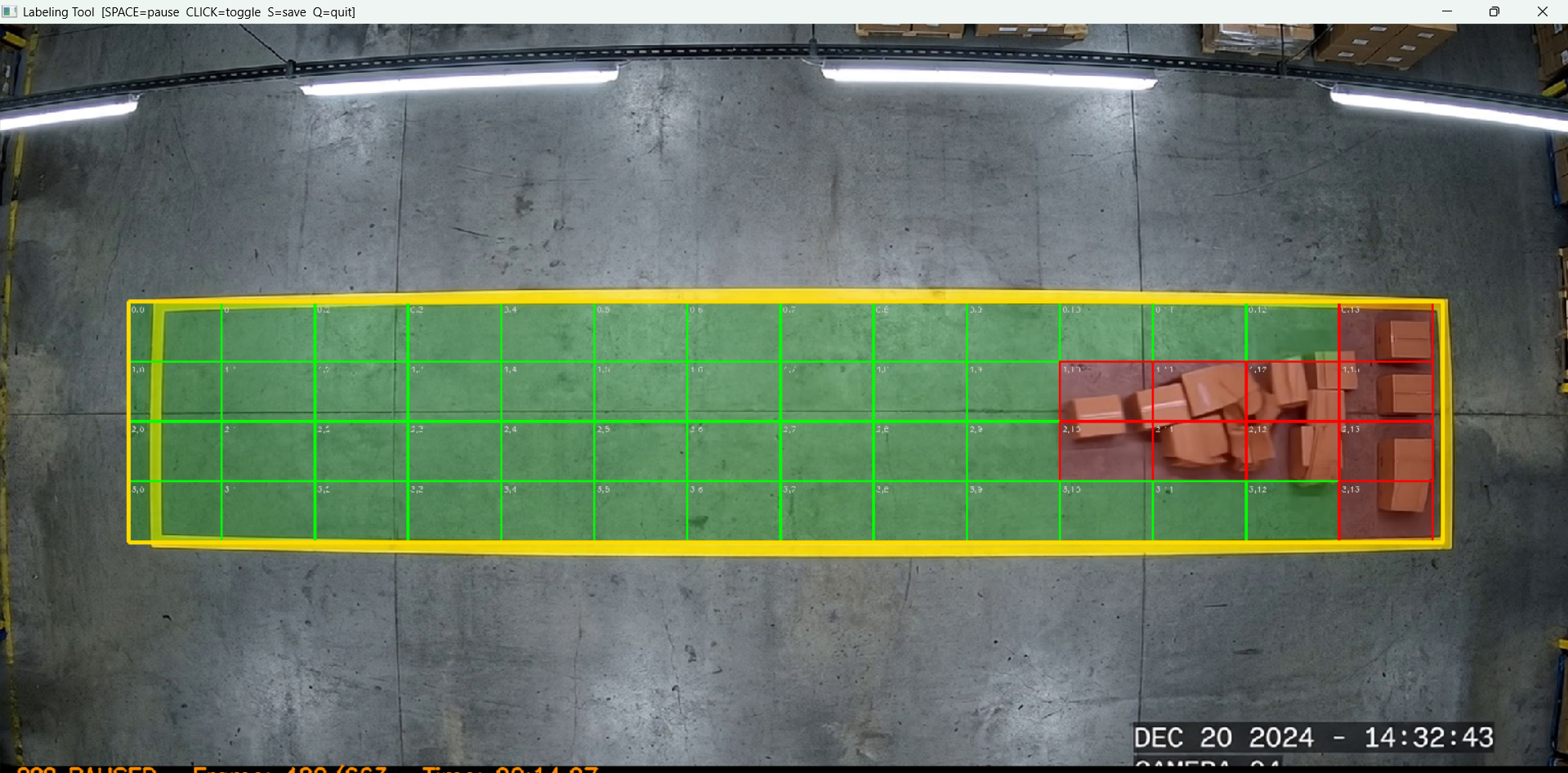
- Staging Occupancy Detection: Compares each camera frame with an empty reference image and classifies grid cells as occupied or free. Smoothing over time reduces false detections.
- Prescriptive Recommendations: Suggests specific actions such as moving workers between unloading and staging clearance, or slowing gate release, instead of only showing alerts.
- Constraint-Aware Decisions: Recommendations respect the worker pool, forklift count, per-dock limits, and staging capacity. Invalid ones are rejected and logged.
- Interactive Dashboard: Shows queue length, predicted waiting time, dock utilization, staging risk, and trends. Supervisors can update workers, forklifts, and active docks.
- Fault Tolerance: If camera frames are lost, the system keeps the last valid state, switches to a frame-loss mode, and resumes when frames return.
- Simulation Mode: Demonstrates system behavior when live camera inputs are unavailable.
Testing & Results
The computer vision components were evaluated during prototype testing. The team reported approximately 94.7% staging occupancy accuracy against a project requirement of 90%. Occupancy refresh times were approximately 1.02–1.04 seconds, within the requirement to update staging occupancy within five seconds. These figures are reported project results; the evaluation data and test procedure are not included in this portfolio repository.
My Contribution
I worked on the software side with my teammate from ICS Department, covering the dashboard, backend integration, and computer vision. I trained the YOLO model for license plate detection and built the EasyOCR recognition pipeline, including preprocessing, correction rules, and multi-frame voting. I connected the camera-based detection to the yard management system, and I worked on the staging occupancy pipeline and the frame-loss handling that keeps the system stable. I also tested these parts against the project requirements.